Élingues en sangle Elles sont largement utilisées pour le levage de machines, de produits sidérurgiques, de tuyaux, d'équipements et autres charges lourdes. Parmi les différents types disponibles, les élingues en sangle sans fin et les élingues plates sont deux options courantes.
Les deux sangles sont fabriquées en matière synthétique haute résistance, généralement du polyester, mais leur construction diffère. Cette différence influe sur leur mode de fixation à la charge, leur utilisation et les applications de levage auxquelles elles sont le mieux adaptées.
Une élingue en sangle sans fin est fabriquée en reliant les deux extrémités de la sangle pour former une boucle continue.
Il n'y a pas d'anneaux de levage fixes à chaque extrémité. L'élingue forme une boucle unique qui peut être placée autour de la charge ou fixée à un équipement de levage selon la configuration requise.
Les élingues en sangle sans fin sont couramment utilisées dans :
levage par étrangleur
levage de panier
manutention générale
Soulever des charges de formes différentes
Applications où l'élingue doit être repositionnée fréquemment
Un avantage pratique réside dans la possibilité de faire pivoter l'élingue pendant son utilisation. Cela permet à différentes sections de la sangle d'être en contact avec la charge, ce qui contribue à répartir l'usure sur l'élingue.
Une sangle plate est fabriqué à partir de sangles tissées plates avec un œillet de levage à chaque extrémité.
Les œillets peuvent être fabriqués selon différents modèles en fonction de l'équipement de levage et de l'application, notamment des œillets plats, des œillets inversés et d'autres configurations.
Les élingues plates sont couramment utilisées pour les opérations de levage générales où l'élingue doit se connecter directement à un crochet de grue, une manille ou tout autre composant de levage.
Les applications typiques comprennent le levage :
Machinerie
Produits sidérurgiques
matériaux de construction
Tuyaux
Équipements industriels
Produits finis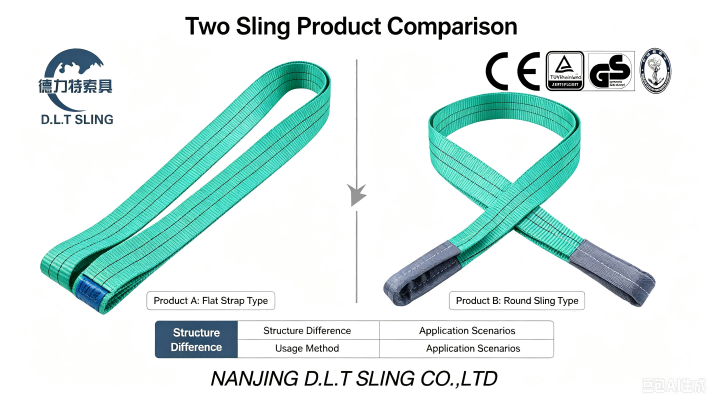
La différence fondamentale est simple :
Un sangle sans fin une boucle continue, tandis qu'une élingue plate en sangle possède deux extrémités munies d'anneaux de levage.
Cette différence de construction détermine la façon dont chaque élingue est positionnée et connectée lors du levage.
| Fonctionnalité | Sangle en sangle sans fin | Sangle plate en sangle |
|---|---|---|
| Construction | boucle continue | Sangle plate à deux extrémités |
| Lever les yeux | Pas d'yeux fixes | Lever les yeux aux deux extrémités |
| Flexibilité | Haut | Haut |
| nœud étrangleur | Approprié | Approprié |
| attelage de panier | Approprié | Approprié |
| Levage vertical | Selon le modèle | Application commune |
| Repositionnement | Facile | Plus limité |
| Application typique | levage et manutention flexibles | Manutention générale |
La conception en boucle continue offre plusieurs avantages pratiques.
L'élingue peut être positionnée autour de différentes parties d'une charge sans être limitée par des anneaux de levage fixes.
Lors d'opérations de levage répétées, l'élingue peut être pivotée afin de modifier la zone de contact. Cela permet de réduire l'usure concentrée sur une partie de la sangle.
En fonction de la capacité nominale et des instructions du fabricant, les élingues sans fin peuvent être utilisées en configuration étrangleur et en panier.
La sangle synthétique est légère comparée à de nombreux produits de levage traditionnels, ce qui rend l'élingue facile à transporter, à positionner et à ranger.
Les élingues plates en sangle sont largement utilisées en raison de leur conception simple.
Les anneaux de levage situés aux deux extrémités permettent une connexion directe aux crochets, manilles et autres équipements de levage.
Différentes configurations d'œillets peuvent être sélectionnées en fonction de la taille du crochet et de l'application de levage.
Pour les opérations de levage courantes en usine, en entrepôt, sur les chantiers de construction et dans l'industrie, les élingues plates en sangle constituent un choix pratique.
L'élingue peut être fournie avec une étiquette d'identification durable indiquant des informations telles que la charge maximale d'utilisation (WLL), la longueur, le matériau et les normes applicables.
Le choix doit se fonder sur la méthode de levage et non pas simplement sur le nom de l'élingue.
Une élingue en sangle sans fin peut être plus appropriée lorsque l'élingue doit s'enrouler autour de la charge et être repositionnée pendant le levage.
Une élingue plate est souvent plus pratique lorsque la charge possède des points de levage appropriés ou lorsqu'une élingue classique à deux extrémités est nécessaire.
Avant de choisir une élingue, vérifiez les informations suivantes :
Poids de la charge
Limite de charge de travail requise (WLL)
Longueur de la sangle
Largeur de l'élingue
configuration de levage
Dimensions du crochet ou de la manille
Forme de charge
Contact avec des arêtes vives
Température et environnement de travail
La charge maximale d'utilisation (CMU) peut également varier selon la configuration de levage. Une élingue utilisée verticalement peut avoir une capacité nominale différente de celle de la même élingue utilisée en étranglement ou en panier.
Il convient de toujours vérifier l'étiquette du fabricant et le tableau des charges avant utilisation.
Les sangles synthétiques sont résistantes et flexibles, mais elles peuvent être endommagées par des arêtes vives, une abrasion excessive, la chaleur ou des produits chimiques.
Avant chaque utilisation, inspectez la sangle pour détecter tout dommage visible, notamment :
Coupures ou déchirures
Abrasion excessive
Coutures abîmées
marques de chaleur ou de brûlure
Dommages chimiques
Déformation
Étiquettes endommagées ou manquantes
Lors du levage de charges aux arêtes vives, une protection appropriée des bords doit être utilisée pour éviter que la sangle ne soit coupée ou endommagée.
Les sangles doivent également être rangées à l'abri de la lumière directe du soleil, de l'humidité, des produits chimiques et des températures excessives lorsqu'elles ne sont pas utilisées.
Nanjing DLT Sling Co., Ltd. fabrique une gamme de produits de levage en fibres synthétiques, notamment des élingues en sangle sans fin, des élingues en sangle plate, des élingues de levage rondes et des élingues de levage en HMPE/UHMWPE.
Nos sangles de levage peuvent être fournies dans différentes largeurs, longueurs, charges maximales d'utilisation (CMU), couleurs, étiquettes et configurations d'emballage, selon les exigences du client.
Pour les élingues de levage en polyester, les produits peuvent être fabriqués conformément à la norme EN 1492-1, avec un coefficient de sécurité de 7:1 pour les produits concernés.
Pour les distributeurs, les fournisseurs d'équipements de levage et les utilisateurs industriels, nous pouvons également fournir des spécifications personnalisées pour différentes applications de levage.
Lorsqu'on compare les élingues sans fin et les élingues plates, le point le plus important réside dans leur conception et leur utilisation prévue. Choisir la configuration d'élingue et la charge maximale d'utilisation (CMU) appropriées est essentiel pour des opérations de levage en toute sécurité.





 IPv6 RÉSEAU PRIS EN CHARGE
 E-mail
: sales@dlt-sling.com
E-mail
: sales@dlt-sling.com
 Obtenir un devis